


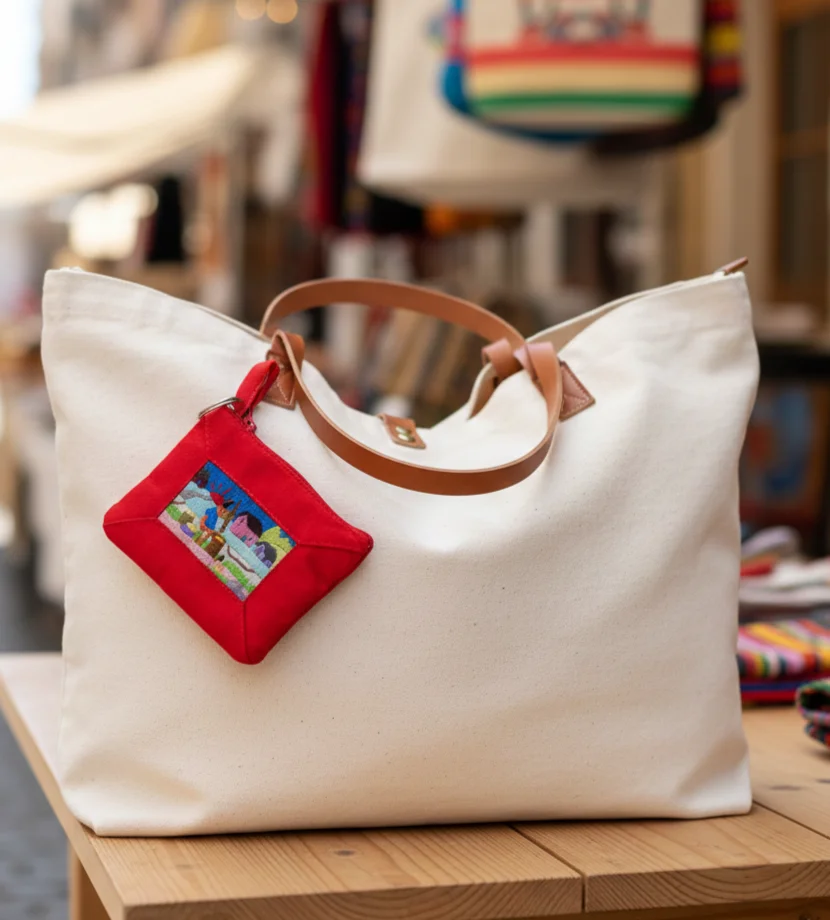
African craftsmanship facing the threat of imitation
The African handicraft market has never been more dynamic. In Europe and around the world, people looking for authenticity, beauty, and ethical products are increasingly turning to objects made across the African continent: sculptures, jewelry, textiles, basketry, and decorative pieces.
But this growing enthusiasm also has a downside. As demand has increased, so has a misleading parallel market: mass-produced, machine-made objects, sometimes manufactured in industrial workshops outside Africa, yet presented as authentic African crafts.
So, how can you tell the difference? How can you be sure that the item you are buying was truly made by human hands, on the African continent, while respecting traditional craftsmanship? And how can you avoid supporting counterfeit products at the expense of the artisans whose profession, expertise, and livelihood depend on their craft?
Here is our complete guide to helping you make informed purchasing decisions while buying with both your mind and your heart.
1. Look for Imperfections: The Mark of the Human Hand
The first and often the most reliable sign of an authentic handmade object is, paradoxically, what many people consider a flaw: imperfection.
A truly handmade piece will never be perfectly symmetrical. The edges of a woven basket will never be completely identical. The two horns of a zebu sculpture may have slightly different curves. Patterns on handwoven fabric may show very subtle variations in the threads or colors.
These are not mistakes. They are proof of human craftsmanship. The hand that creates is not an industrial precision tool, and that is precisely what makes each piece valuable, unique, and irreplaceable.
By contrast, a piece that looks too perfect with extremely sharp edges, perfectly uniform patterns, and completely consistent colors should raise some questions. Absolute perfection is the language of the machine, not the artisan.
2. Touch and feel the material: your senses can tell the difference
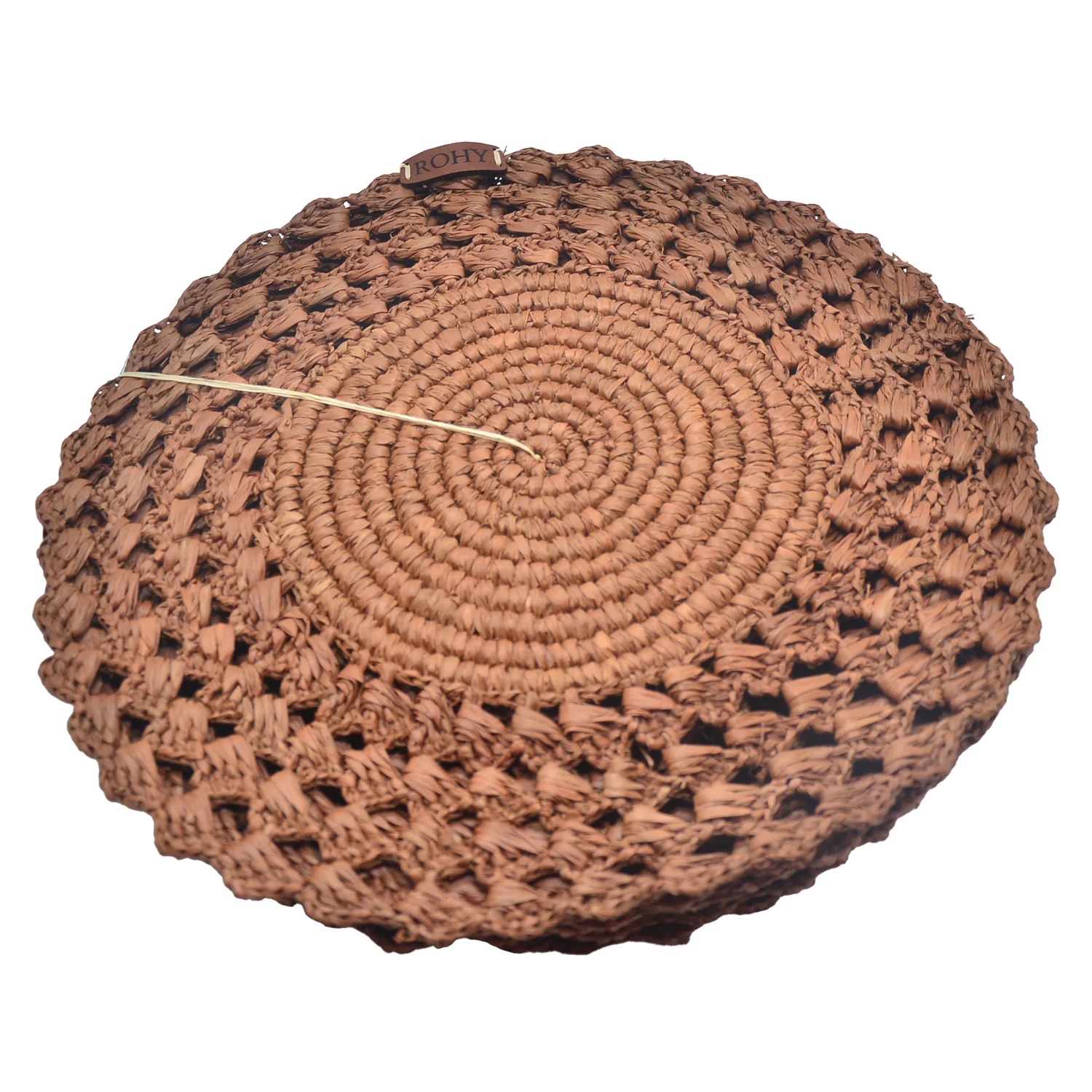
The authenticity of an African handmade object can often be felt through touch before it can even be seen.
- Hand-carved wood has a slightly irregular texture under your fingers, with a warm, natural feel. Industrially treated wood tends to have a surface that is too smooth, too cold, and too uniform.
- Zebu horn that has been handcrafted retains a subtle natural translucency and a gentle warmth to the touch. It never feels or smells like plastic.
- Hand-forged and carved metal bears subtle traces left by the artisan’s tools tiny reliefs and variations that industrial casting cannot fully reproduce.
- Handwoven raffia, wicker, and natural fibers have a subtle yet distinctive vegetal scent, which is usually absent from synthetic imitations.
- Handwoven fabrics, such as kente, bogolan, or wild Malagasy silk, have a characteristic slight resistance under the fingers, a lively, authentic texture that polyester or industrially printed cotton cannot truly replicate.
Take the time to touch. To smell. To feel. Your senses are often your best experts
3. Examine the finishing: attention to detail reveals everything
An artisan who truly masters their craft never cuts corners when it comes to finishing even in areas that may not be immediately visible.
On a wooden sculpture, turn the piece over and examine the underside. A meticulous artisan will have sanded and treated every surface, including those that remain hidden. On a handcrafted silver piece, inspect the inside of the rings and clasps: you may notice subtle traces of hand polishing. On a woven basket, look closely at the final joint. It should be discreetly incorporated into the pattern rather than simply glued or stapled.
The finishing is the artisan’s signature. It reveals their standards, their pride in their work, and their respect for the person who will ultimately own the piece.
4. Ask about its origin: an authentic object has an address
A genuine African handmade object comes from somewhere a village, a region, a community, or a specific cultural tradition. It has a geography and a story.
Don’t hesitate to ask the seller or the store:
- Where exactly does this object come from? (country, region, community)
- What technique was used to make it?
- What is the cultural meaning of this object or its patterns?
- How was the artisan compensated?
A serious and ethical seller should be able to answer these questions with accuracy and enthusiasm. If a seller remains vague, changes the subject, or cannot explain where the piece comes from, that should raise a red flag.
Authenticity always has an address. An object without a story is an object without a soul.
5. Be wary of prices that are too low: beauty has a fair cost
One of the clearest warning signs is the price.
An authentic African handmade object—crafted by hand from quality natural materials by an artisan who is fairly compensated—cannot realistically cost just a few euros. The time and skill required to make it alone make such pricing difficult to justify.
When you see a carved mask selling for €3, a horn jewelry piece priced at €1.50, or a raffia basket offered for €2, ask yourself: who paid the difference?
The answer is almost always the same: the artisan, who was underpaid; the quality, which was sacrificed; or both.
A fair price is an essential part of authenticity. It reflects the time, craftsmanship, materials, and dignity of the person who created the piece.
6. Look for ethical labels and guarantees
In a market that remains relatively unregulated, certain labels and certifications can help guide consumers toward more reliable purchases:
- Fair Trade labels guarantee decent pay and working conditions for producers.
- Local craftsmanship labels, issued by certain African associations or cooperatives, certify geographical origin and handmade production.
- Specialized, ethically committed stores that work directly with artisans and can accurately trace the origin of each piece.
Traceability is key. The more clearly you can follow an object’s journey from the artisan’s hands to your own, the more confidence you can have in its authenticity.
7. Choose the right places to buy
Where you buy an object has a major impact on its quality and authenticity.
- Non-specialized tourist markets often offer products of varying quality, some of which may even be imported from factories in Asia.
- Supermarkets and general-purpose bazaars generally cannot guarantee the handmade origin of the objects they sell.
- Specialized stores, whether physical or online, that are committed to ethical practices and transparency, remain one of the safest ways to access genuine African handmade pieces.
- Artisan cooperatives and organizations promoting local craftsmanship are also valuable sources for direct and fair purchases.
HGP Afrikan Touch: Authenticity as a Founding Commitment
In a market where imitation has become increasingly common, HGP Afrikan Touch has made authenticity the very heart of its identity and its foremost commitment.
A Selection Without Compromise
Every object offered by HGP Afrikan Touch goes through a rigorous selection process. No mass-produced pieces. No products with unclear or questionable origins. Only authentic objects handcrafted by African artisans and Malagasy artisans in particular while respecting their traditions and ancestral know-how.
Genuine Traceability
At HGP Afrikan Touch, every piece has a story that can be told: the region it comes from, the technique used to create it, and the community of artisans who produced it.
This transparency is not simply a marketing argument—it is a deeply held belief.
Trade That Respects Artisans
HGP Afrikan Touch operates according to a fair-trade approach, ensuring that artisans receive fair compensation for their work.
Buying from HGP Afrikan Touch means choosing to put your money where it truly matters: in the hands of those who create, preserve, and keep a culture alive.
Informed Guidance
Because understanding what you are buying is the first step toward a meaningful purchase, HGP Afrikan Touch shares the story, meaning, and cultural origins behind each object.
You are not simply buying a product. You are welcoming a living piece of heritage—carrying memory and meaning—into your everyday life.
With HGP Afrikan Touch, you can buy with confidence. You choose knowingly, thoughtfully, and with heart.
Explore our store:
- AFRIKAN TOUCH HOME
- ROOT OF STYLE
- GOLDEN HANDS
- SCULPTED SPIRITS
- WEAVING OF THE WIND
- SOFT LINE
- CREATIVE BREATH
The quick guide: 7 questions to ask before buying
Before purchasing any object presented as African handmade craftsmanship, ask yourself these seven questions:
- Are there natural imperfections that suggest the piece was made by hand?
- Do the texture and scent correspond to a natural material?
- Are the finishing details carefully crafted, including areas that are not immediately visible?
- Does the seller know the precise origin of the object?
- Does the price reflect human labor that is fairly compensated?
- Is there an ethical label or guarantee?
- Is the seller or purchasing channel specialized and committed to transparency?
If the answers to these questions satisfy you, you are likely looking at an authentic piece.
Go for it and enjoy it.
Related articles:
- The History of Malagasy Handcrafted Objects: A Living Heritage Between Tradition and Identity
- Why Is African Craftsmanship Becoming Increasingly Popular in Europe?
- The Origins and Symbolism of the Baobab in Africa
- Afrikan Touch: When African Craftsmanship Tells a Story
Conclusion: buying fairly is also a cultural act
Recognizing a genuine African handmade product begins with learning to look differently. To slow down. To ask questions. To reject the ease of an impulsive purchase in favor of a conscious and informed choice.
It is also a cultural and social act. Every time you choose an authentic object over an imitation, you say no to exploitation and yes to creativity. You say no to uniformity and yes to diversity. You say no to forgetting and yes to passing heritage on to future generations.
African craftsmanship is alive. It deserves to be recognized, respected, and supported by buyers who know what they are looking for and refuse to settle for less.
Trust HGP Afrikan Touch to guide you. Authenticity is something worth earning—and sharing.