


“Madagascar, an island-continent with a thousand faces of craftsmanship.”
Located in the heart of the Indian Ocean, about 400 kilometers off the African coast, Madagascar is not only the world’s fourth-largest island. It is also a unique cultural universe, shaped over centuries by African, Austronesian, Arab, Indian, and European influences. This remarkable blend of cultures has given birth to a civilization of extraordinary richness.
Nowhere is this cultural wealth expressed more beautifully than through Madagascar’s handcrafted objects.
From the highlands of Imerina to the wild southern coasts, from the eastern rainforests to the western savannas, every region of the Great Island has developed its own techniques, materials, and symbolic traditions. These handcrafted objects are far more than decorative items—they embody memory, identity, spirituality, and the enduring connection between the living and their ancestors.
Let’s explore this fascinating story.
The Origins: When Craftsmanship Was Born with Malagasy Civilization
The history of Malagasy craftsmanship dates back nearly 2,000 years, to the island’s earliest settlers. The first inhabitants, who arrived from the islands of Southeast Asia—particularly Borneo—brought with them weaving, navigation, and woodworking techniques that became the foundation of Madagascar’s material culture.
Over the centuries, successive waves of migration from East African Bantu peoples, Arab merchants, Indian traders, and European settlers further enriched this heritage. Every culture left its mark on the shapes, colors, materials, and functions of handcrafted objects.
This unique cultural fusion is the true secret of Malagasy craftsmanship: deeply rooted in local traditions while remaining open to influences from around the world.
Weaving: The Royal Art of Silk and Raffia
The Lamba:gasy Soul The Garment of the Mala
If one object could symbolize Malagasy craftsmanship, it would undoubtedly be the lamba, the large rectangular cloth traditionally draped over the shoulders by Malagasy people throughout every stage of life—from birth to death.
The lamba is much more than a piece of clothing; it is a language. Its colors, patterns, and fabric reveal a person’s social status, region of origin, and the occasion for which it is worn. The lamba mena (red lamba) is associated with royalty and funeral ceremonies, while the lamba akotifahana, woven from wild silk with intricate geometric patterns, was once reserved exclusively for the Merina aristocracy.
Landibe Wild Silk: A Malagasy Treasure
Madagascar is one of the few places in the world where wild silk is still harvested and woven by hand. This exceptional silk comes from the cocoon of the endemic silkworm Borocera madagascariensis, commonly known as Landibe.
Collected from the forests of eastern Madagascar and the central highlands, this raw silk, distinguished by its golden sheen and slightly irregular texture, is transformed by hand into fabrics of remarkable beauty.
Wild silk weaving is a traditional skill passed down from mother to daughter for generations. Every woven motif—jabo, laminamina, and ira-droa—carries a specific meaning, symbolizing fertility, protection, prosperity, and the bond with ancestors.
Raffia: The People’s Natural Fiber
In southern and western Madagascar, where vast raffia palm forests thrive, raffia has long been the essential raw material of daily life.
Braided, woven, and knotted, raffia is transformed into bags, hats, mats, baskets, garments, and ceremonial objects. Raffia craftsmanship is particularly developed among the Sakalava and Betsileo peoples, whose skilled artisans create pieces of extraordinary precision and refinement.
Basket Weaving: Geometry and Patience
Basket weaving is one of Madagascar’s most widespread traditional crafts, yet every region has developed its own distinctive style.
In the central highlands, artisans weave baskets from marsh grasses and reeds, creating precise geometric patterns in natural shades of beige, ochre, and brown, sometimes enhanced with vibrant colors obtained from plant-based dyes.
In southern Madagascar, the Antandroy and Mahafaly peoples weave ceremonial funeral mats decorated with powerful symbolic motifs. These mats are used to wrap the deceased and accompany them on their journey to the world of the ancestors.
In Morondava and along the west coast, weaving with Satrana palm leaves produces wide, breathable hats that symbolize the Sakalava way of life, as well as baskets, trays, and decorative objects that are now highly sought after across Europe.
Woodworking: Between Sacred Sculpture and Exceptional Furniture
Madagascar is home to one of the world’s richest collections of precious hardwoods. Rare species such as rosewood, ebony, ambrevade wood, and avoha have been skillfully crafted by Malagasy artisans for centuries, demonstrating exceptional mastery of woodworking.
Wooden Keychain
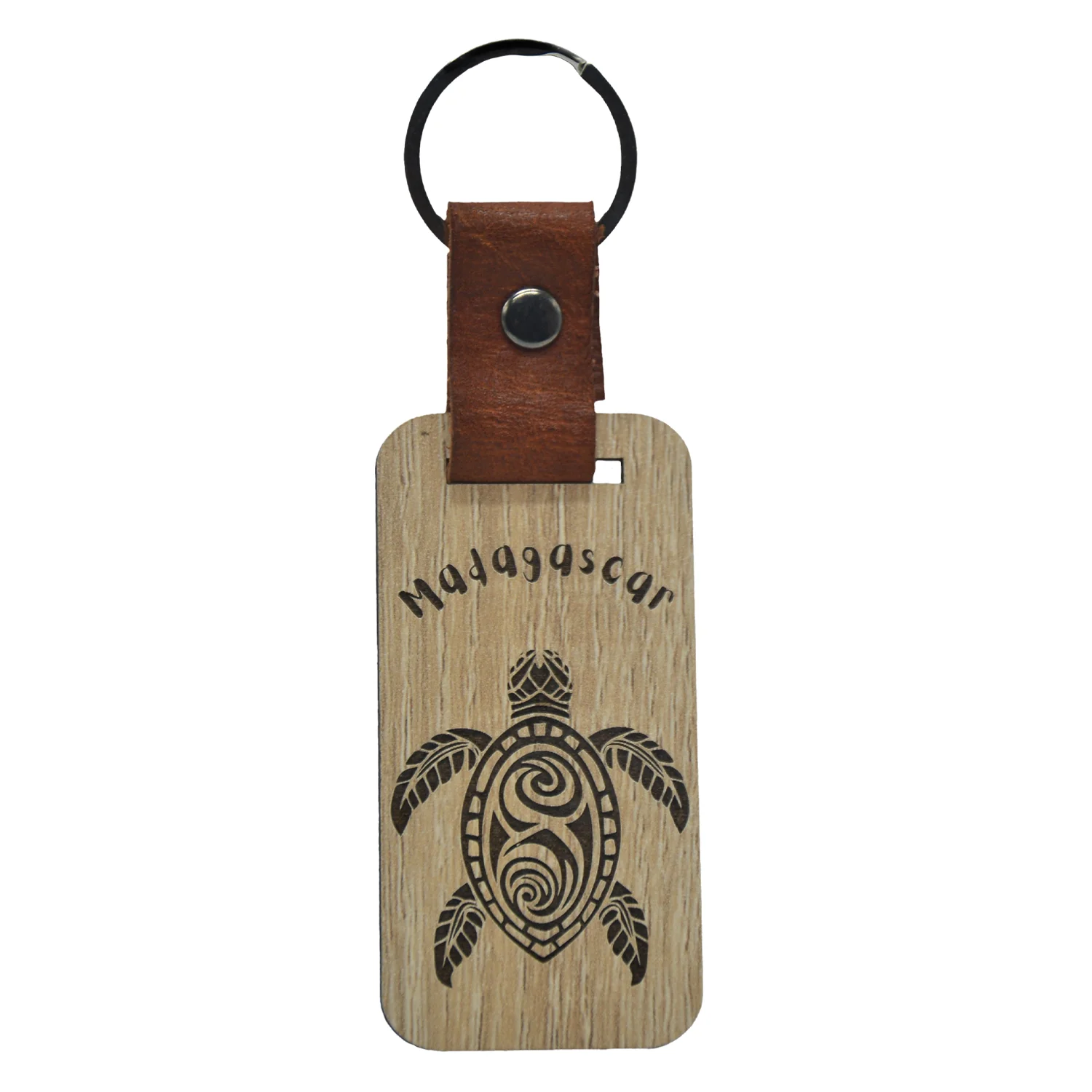
This wooden keychain is the result of generations of ancestral craftsmanship. Hand-carved from locally sourced wood selected for its durability and natural beauty, it is patiently sanded until its surface becomes as smooth as skin. No artificial colors are used to conceal its natural shades because Malagasy wood needs no embellishment. Its beauty lies in its grain, its knots, and the subtle variations in its texture, each telling the story of the tree from which it came.
Attached to your keys, it will travel with you every day—in your bag, your pocket, or in your hand. And somewhere, thousands of miles away, the hands that crafted it will continue their work, passing on to future generations this precise craftsmanship, this rare patience, and this enduring love of beauty.
Zebu Horn Keychains
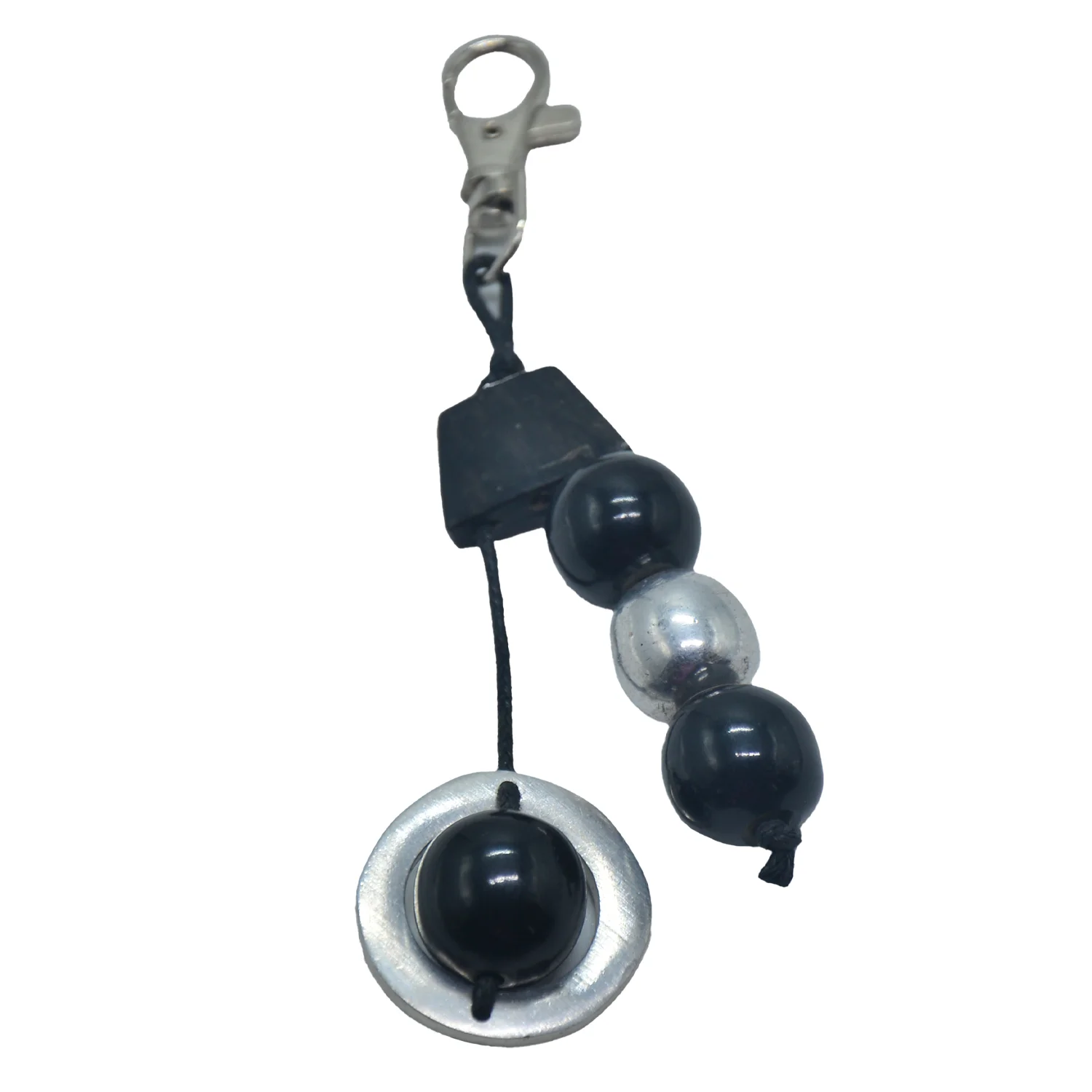
Before speaking about the keychain itself, we must first talk about the zebu.
In Madagascar, the zebu is far more than just an animal. It lies at the heart of the country’s economy, spirituality, and social prestige. A man’s wealth is often measured by the number of zebus he owns. Marriages are sealed with zebus. Ancestors are honored with zebus. For thousands of years, this majestic and patient animal has woven its way through Malagasy history like a golden thread running through a fabric—almost invisible from afar, yet essential to its very structure.
And the zebu’s horn is a gift.
Malagasy artisans have long understood that no part of the zebu should ever go to waste. Hard and noble, blending shades of ivory and amber, the horn possesses a natural beauty that no synthetic material can imitate. Every horn is unique in its color, shimmering reflections, and gentle curves. Some display warm honey-blond tones, while others reveal deep brown hues, almost black, with translucent veins that capture the light like stained glass.
The artisan takes this raw material, gently heats it to make it more flexible, then shapes, carves, and polishes it hour after hour until it reveals its true character. This zebu horn keychain is the result of that patient dialogue between the craftsman and the material.
Embroidery and Lace: A Reimagined Colonial Heritage
During the nineteenth century, European missionaries—particularly British and Norwegian—introduced needle embroidery and bobbin lace-making techniques to Madagascar. Rather than simply copying these methods, Malagasy craftswomen embraced them and infused them with local motifs, vibrant colors, and a uniquely Malagasy artistic sensibility.
Richelieu embroidery and Ambalavao lace soon became distinctive Malagasy specialties, exported to European markets as early as the beginning of the twentieth century. Tablecloths, blouses, bedspreads, and bridal trousseaus—these immaculate white creations, meticulously stitched by hand, are now highly prized collectors’ items.
Jewelry: Metal, Seeds, and Beads in the Service of Identity
Malagasy jewelry occupies a unique place in the history of the Great Island’s craftsmanship.
The silver jewelry of the central highlands—including wide bracelets, multi-strand necklaces, and floral-patterned rings—demonstrates exceptional metallurgical expertise inherited from both Arab and African traditions. Among the Merina and Betsileo peoples, silver is considered a sacred metal, symbolizing purity and the connection with the ancestors.
In the coastal regions, artisans create jewelry from seeds, seashells, driftwood, and glass beads. These colorful, lightweight, and joyful creations reflect the freedom and sensuality of life by the sea.
Further south, Antandroy and Bara women wear heavy, multicolored beaded necklaces whose combinations of colors and patterns express their age, marital status, and clan identity.
The Kaopy Gasy
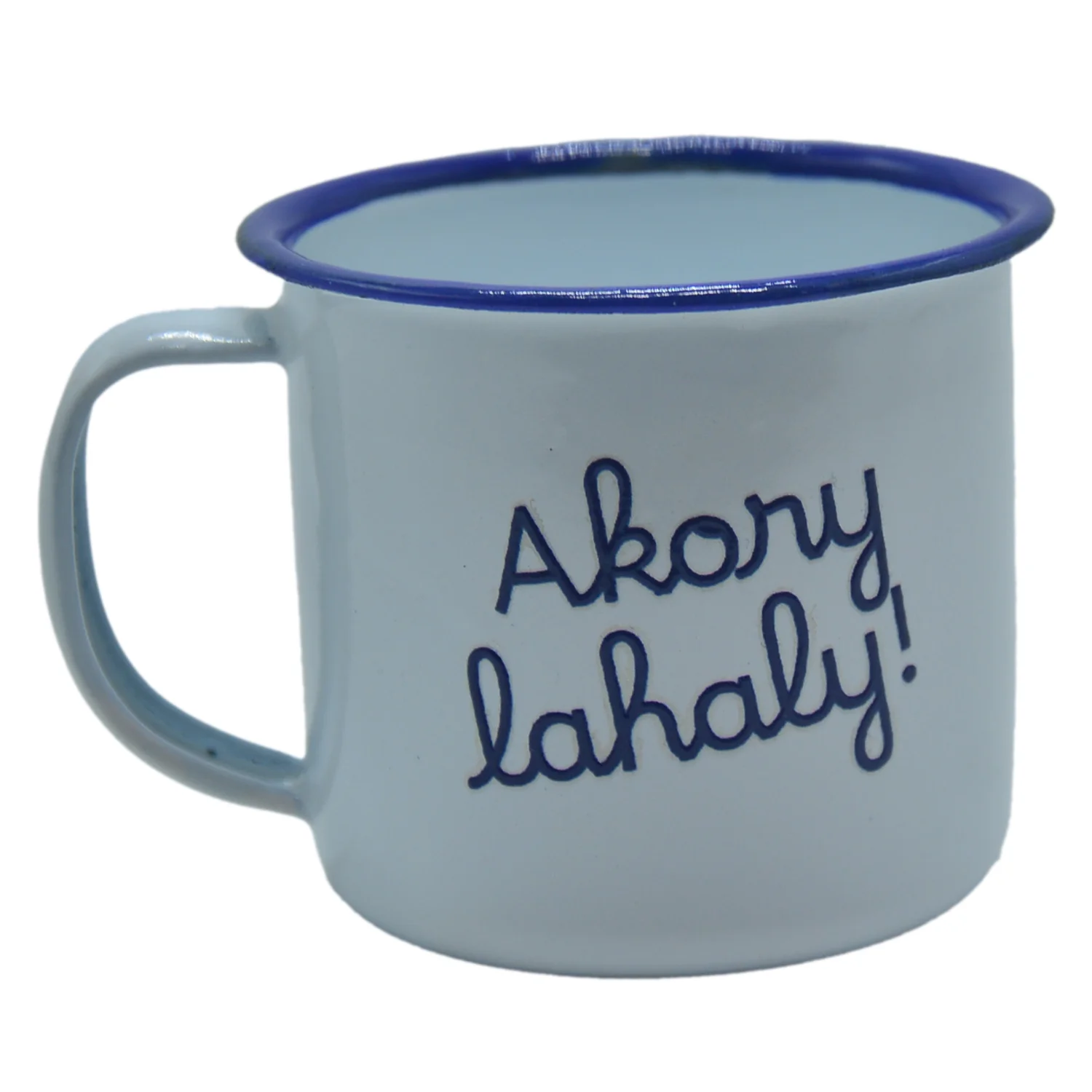
The metal Kaopy Gasy is a work of love and remembrance.
It faithfully recreates the elegant form of this iconic instrument of Malagasy music—from its curved resonating body and long, slender neck to the strings that seem almost ready to vibrate before your eyes. Yet this version is crafted entirely from metal. Forged, chiseled, and polished by skilled artisans, it reflects the expertise of craftsmen who have learned to make metal sing just as others make wood sing.
Every detail is meticulously crafted: the tuning pegs, the central rosette, and the graceful lines running along the neck. This is not merely a replica—it is a reinterpretation, the Kaopy Gasy seen through the eyes of an artisan who loves it enough to give it a second life: a silent yet everlasting one.
Placed on a desk, displayed on a wall, or offered as a gift to a musician or a lover of Madagascar, this sculpted Kaopy Gasy becomes an invitation to conversation. It quietly says: Here, someone chose to preserve something precious. Here, a timeless gesture has been captured so that you may admire it for years to come.
20 cm Black Baobab
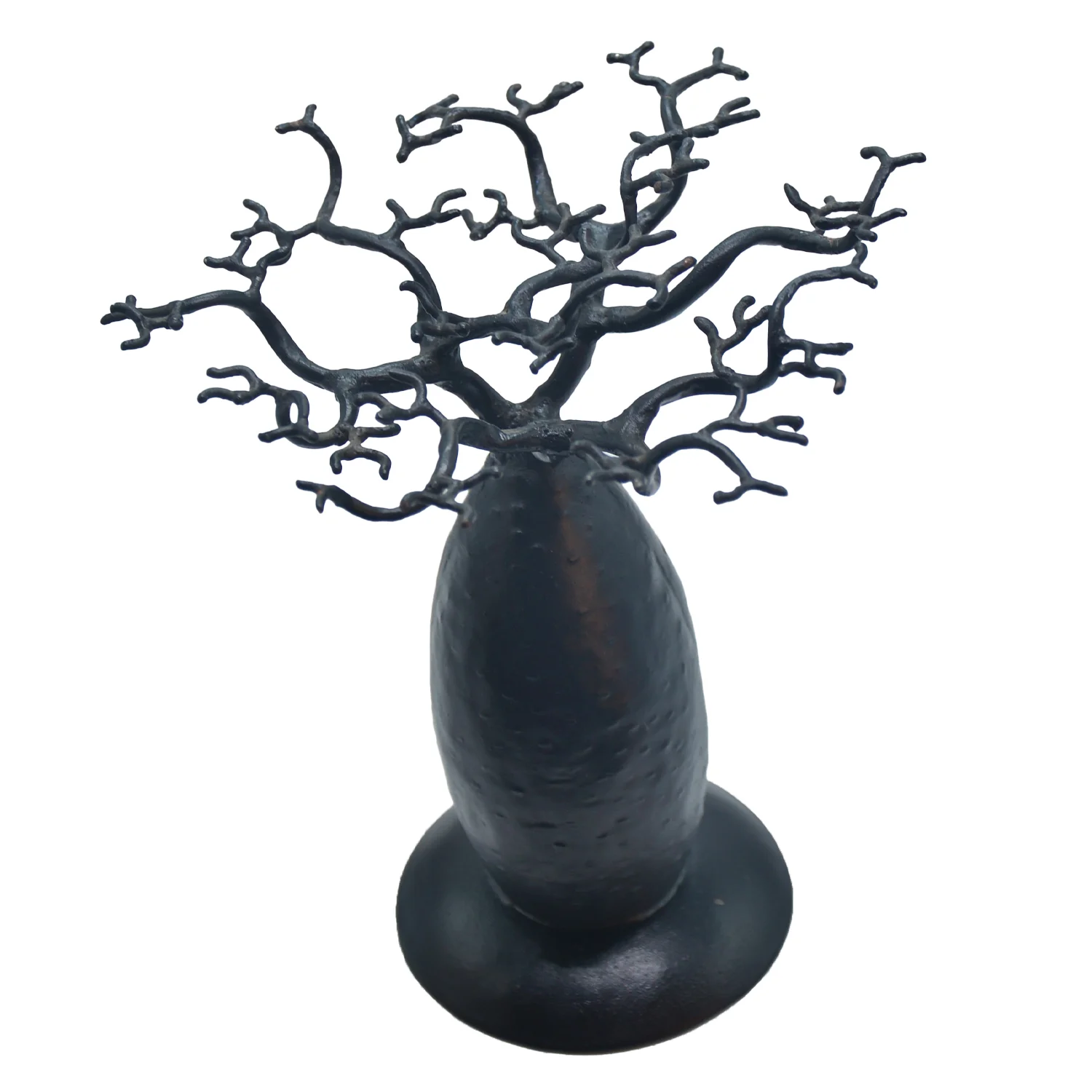
In Madagascar, the baobab does not grow everywhere. It reigns over the western and southern regions of the island, where the landscapes are dry and sunlit, the earth is red, and the sky stretches endlessly. It can live for thousands of years and store thousands of liters of water within its colossal trunk. During the dry season, when it sheds its leaves, its bare branches reach toward the sky like roots, as though the tree had been planted upside down by a distracted god—or perhaps by one who wished to remind humanity that things are not always what they seem.
The Malagasy people call it Reniala, the Mother of the Forest.
The artisan who sculpted this black metal baobab spent countless hours observing the real tree—not in books, but in its natural environment, beneath the evening light, as its immense shadow stretched across the red laterite tracks.
Rather than reproducing the tree itself, the artisan sought to capture its soul—its remarkable presence, its balance of strength and elegance, its broad trunk that seems almost alive, and its branches reaching outward like the thoughts of an ancient sage.
Twenty centimeters of black metal—yet it conveys something monumental.
Its matte black finish—understated, refined, and almost austere—gives the sculpture a dignity worthy of its subject. This is not merely a decorative ornament; it is a genuine work of art. It commands attention in any space, draws the eye, and invites contemplation.
HGP Afrikan Touch: Bringing the Treasures of Madagascar to the World
It is from this extraordinary world of cultural richness and artistic depth that HGP Afrikan Touch carefully selects its collection of authentic Malagasy handcrafted creations.
Fully aware of the cultural, artistic, and human value embodied in every piece, HGP Afrikan Touch offers far more than a simple purchase—it offers an immersive journey into the history, traditions, and soul of the Malagasy people.
The HGP Afrikan Touch Commitment
Carefully Curated Selection
Every item is genuinely handmade by Malagasy artisans using traditional techniques that have been passed down from generation to generation.
Ethical Trade
HGP Afrikan Touch is committed to working with artisans and their communities in a spirit of respect and fairness, ensuring they receive fair compensation for their craftsmanship.
Preserving Cultural Heritage
Every handcrafted piece is accompanied by its story, its geographical origin, and its cultural significance, because understanding an object makes it all the more meaningful.
A Bridge Between Two Worlds
By making Malagasy craftsmanship accessible throughout Europe, HGP Afrikan Touch enables the artisans of the Great Island to preserve their traditions while earning a sustainable livelihood.
You’ll Discover at HGP Afrikan TouWhatch
Handwoven raffia baskets, embroidered table linens, vibrant Lambahoany textiles, silver jewelry, natural seed jewelry, wooden sculptures, and finely woven basketry from Madagascar’s west coast—each creation is a journey, and every purchase is a meaningful encounter.
With HGP Afrikan Touch, Madagascar enters your home with all its soul, its history, and its timeless beauty.
Conclusion: Malagasy Craftsmanship—A Heritage to Preserve and Pass On
The history of Madagascar’s handcrafted objects is the story of a people who have always known how to transform nature into beauty, craftsmanship into symbolism, and raw materials into living memory.
In a world where everything moves ever faster and authenticity is becoming increasingly rare, these handcrafted creations serve as anchors. They remind us that beauty takes time, that true value is passed from one generation to the next, and that every handmade object carries within it an irreplaceable piece of human spirit.
Supporting Malagasy craftsmanship today means helping preserve centuries-old traditions, providing a dignified future for the artisans of the Great Island, and embracing a more conscious, more beautiful, and more meaningful way of engaging with the world.
Discover the HGP Afrikan Touch collection today, and let Madagascar tell you its story—one handcrafted piece at a time.